 Private Tour(131 tours)
 Small group(5 tours)
 Transfer(13 tours)
 Package tour(2 tours)



Ferragosto in Italy: What It Is & How to Spend It Like a Local
When I was a child, summer wasn't a two-week holiday. It was the whole season. From the first real heat of June until the light went gold and thin in late September, my family would move to the Tuscan coast and simply lived there, the same stretch of sand, the same friends returning year after year, the days measured in swims and long lunches rather than dates on a calendar.
And every summer had its high point: Ferragosto.
The one I still think about was a beach barbecue. The whole crowd of us, families who only ever saw each other in summer, coming from different parts of Italy, dragged everything down to the sand as the afternoon cooled. Someone got a fire going. There were sardines, dozens of them, sardine grigliate blistering over the coals, and carafes of cold white wine that never seemed to empty, and the particular loud happiness of people who have nowhere else to be. And then, close to midnight, the thing that turns an ordinary Italian summer night into a memory you keep for forty years: the bagno di mezzanotte, the midnight swim, the whole table getting up and wading into a warm black sea under the stars.
That is Ferragosto. Not the version in the guidebooks. The real one.
So what is Ferragosto, exactly?
Ferragosto falls on August 15th, and it is the beating heart of the Italian summer — the day the entire country stops and goes to the sea, or the mountains, or the long table in the garden.
It's also much older than it looks. The name comes straight from the Emperor Augustus: Feriae Augusti, "the rest of Augustus," a holiday he handed the Roman Empire in 18 BC once the hardest work of the harvest was done — a well-earned collective exhale. Centuries later, the Catholic Church laid the Feast of the Assumption of the Virgin Mary over the same date. So Ferragosto is, all at once, pagan and sacred and gloriously secular — a Roman emperor's gift, a holy day, and an excuse for a barbecue. Which is about as Italian as a holiday can get.
What actually happens on Ferragosto (and what closes)
If you're in Italy in mid-August, you'll feel Ferragosto before you can name it.
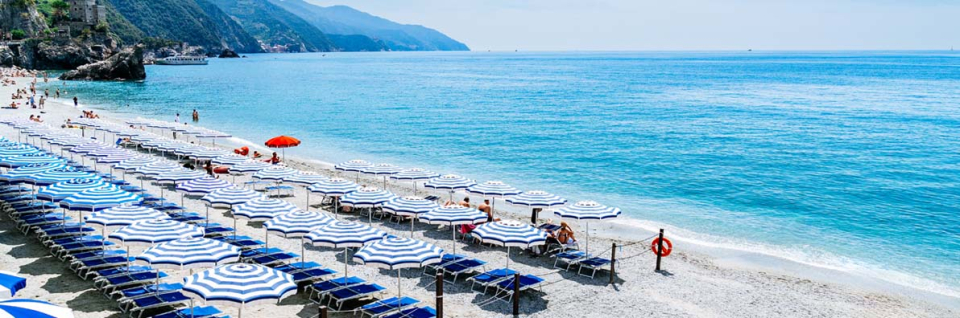
In the days around the 15th you'll hear about the esodo — the "exodus," when Italians pour out of the hot cities toward the coast and the mountains. Shutters come down, and hand-written "chiuso per ferie" (closed for the holidays) signs go up in shop windows.
When I was growing up in the 1970s and 80s, this was total. Whole cities simply switched off for August — around Ferragosto you could walk for blocks and struggle to find a grocery that was open, and the autostrade were one solid river of cars, millions of them, all pointed at the sea. That Italy has softened. Long holidays cost more than many families can spare now, so fewer people vanish for the entire month — and the historic centers that once fell silent are today full of international visitors instead. So expect an August city to be quieter than usual and dotted with closures, but no longer the ghost town it was a generation ago. The coast, though, still overflows.
Here's the honest practical picture for a traveler:
Usually closed on August 15th: public offices, banks, many independent shops, and a good number of family-run restaurants — often for several days around the date, not just the day itself.
Usually open: the major museums, monuments, and archaeological sites. That's genuinely good news — Ferragosto can be a wonderful day to visit a great museum or an ancient site, precisely because the locals are all at the beach.
So should you avoid Italy on Ferragosto? No — but don't improvise it. Wander in without a plan and you can end up on a gridlocked motorway with everything around you shut. Plan it even a little, and it becomes one of the best days of the whole trip.
Gallery
View all 6 photos
The two insider moves
Here's what twenty years of arranging summers in Italy has taught me: on Ferragosto, you want to be in one of two places — out on the water, or inside an empty museum. Both put you exactly where the crowd isn't.
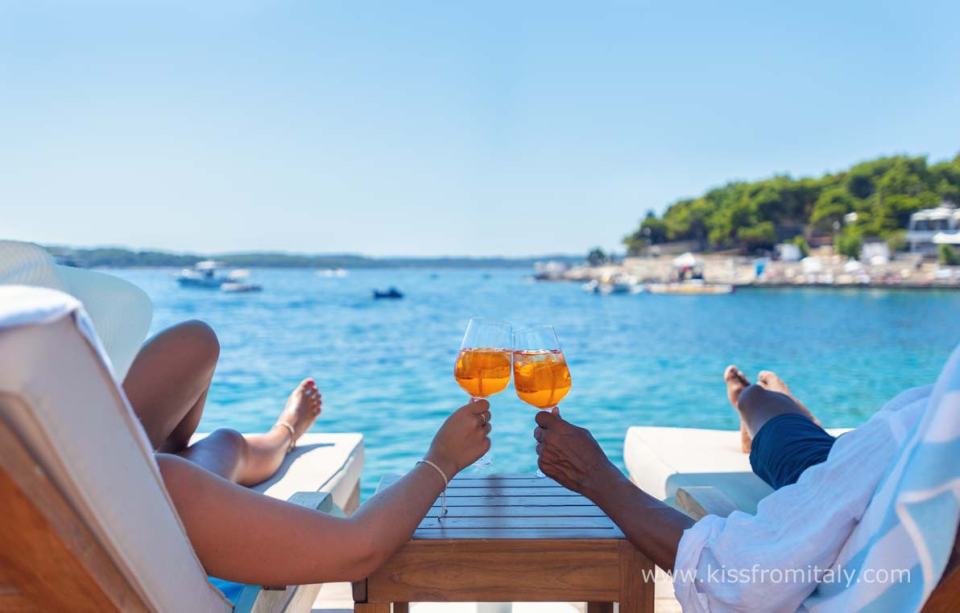
Move one: get on the water. All of Italy goes to the sea on the 15th, and the sea is where the magic is — but the public beaches are a crush, elbow to elbow with no free umbrella and no quiet. So the move I'd make for my own family is to get on the water rather than fight for a patch of sand beside it. A private boat for the day along the Amalfi Coast, around Capri, or off the Cinque Terre gives you everything Ferragosto is supposed to be: swimming off the back of the boat into clear water, a long slow lunch, that specific summer idleness the Italians call dolce far niente — with none of the crush. You watch the packed beach from the water instead of from inside it. It is, quietly, the best seat in the country that day.
Move two: walk into an empty museum. Remember that the major sites mostly stay open while the whole country is at the beach — which hands you something you almost never get in Italy: room. Skip the headline attractions with their year-round lines and pick a quieter one, and you may have it entirely to yourself. Go to the Terme di Diocleziano in Rome — the vast baths Michelangelo later reworked into a church — on Ferragosto and there's a real chance you'll wander those enormous halls as the only person in them. On the one day of the year when Italy is most crowded at the shore, its greatest rooms can be completely, improbably yours.
A few places worth being on Ferragosto
If you're inland — Siena. The day after Ferragosto, on August 16th, Siena runs the Palio — bareback horses tearing around the Piazza del Campo for the pride of the city's contrade. It's about ninety seconds of race wrapped inside a full day of medieval pageantry, and it's one of the most electric things you can witness anywhere in Italy.
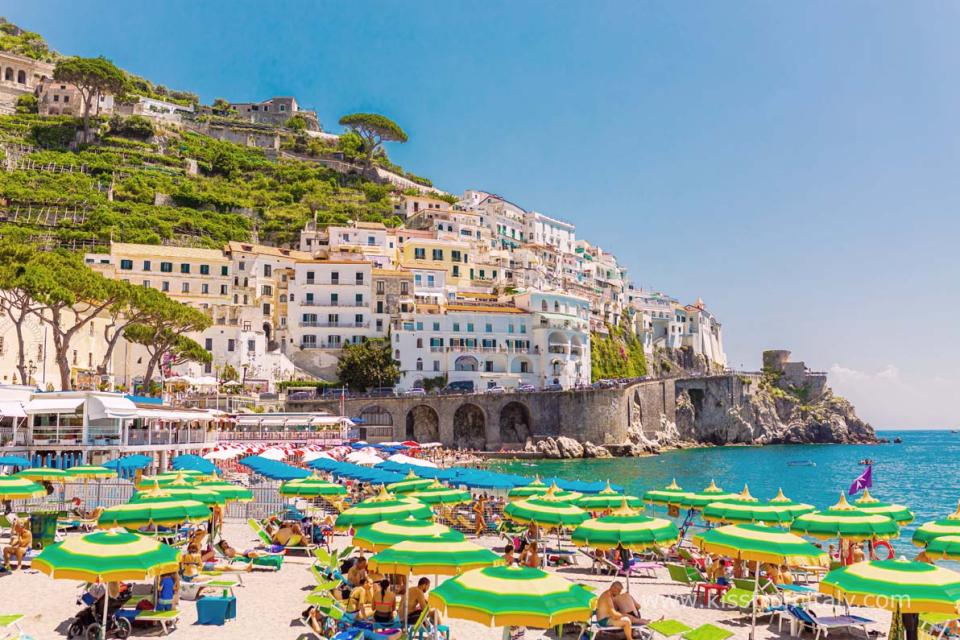
If you're on the coast — the seaside towns come alive after dark: processions honoring the Madonna, boats out on the water, fireworks over the bays of Naples and along the Amalfi Coast, the smell of grilling drifting everywhere. Follow the noise and you'll find the party.
And wherever you are — eat well, and eat late. Ferragosto is a table holiday first. Find the long lunch, or the beach grill, and settle in for the afternoon.
Spend it the way Italians do
For all the history, Ferragosto comes down to a simple instruction: relax, swim, eat, laugh, and don't rush anything.
If you'd like to spend it out on the water — glass in hand, well away from the packed beach — that's exactly the kind of day we arrange, all along the coast we know best. Tell us where you'll be, and we'll take care of the rest.
And whatever you do on the 15th: when midnight comes and someone suggests a swim, go. The bagno di mezzanotte is non-negotiable.
Andrea Barsotti — Founder of Kiss from Italy