 Private Tour(131 tours)
 Small group(5 tours)
 Transfer(13 tours)
 Package tour(2 tours)



Leaning Tower of Pisa: Fun Facts, History & How to Visit
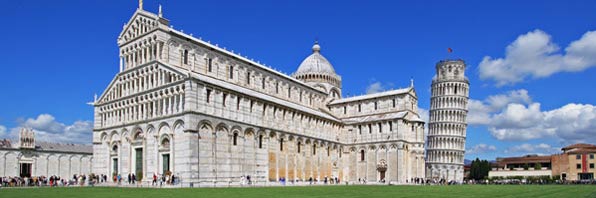
When you picture Pisa, you picture the lean. The free-standing bell tower of Pisa Cathedral, the Torre Pendente di Pisa, is one of the most recognizable buildings on earth, a piece of medieval architecture that appears to defy gravity and has drawn travelers to a quiet corner of Tuscany for centuries.
Most people's first instinct on meeting the tower is to line up the perfect "holding it up" photo. But look past the tilt and you'll find a story that's every bit as improbable as the building itself: two centuries of stop-start construction, a foundation that was doomed from the first stone, a dictator who tried to straighten it, a near-miss in World War II, and a modern rescue that finally stopped it moving. Here are the facts worth knowing before you go.
What is the Leaning Tower of Pisa, and why is it so famous?
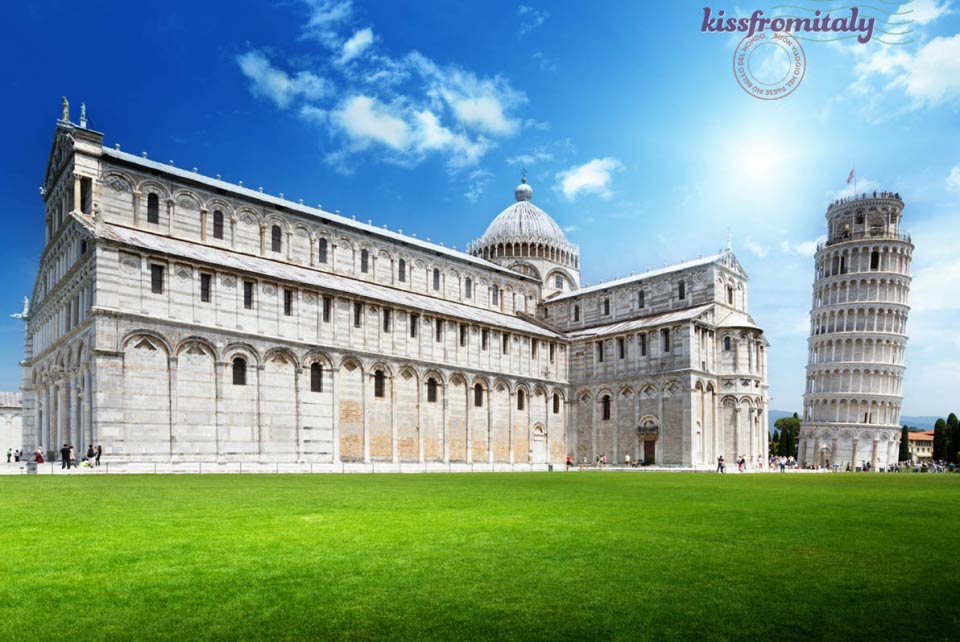
The Leaning Tower is the campanile, or bell tower, of Pisa Cathedral, one of four monuments on the Piazza dei Miracoli ("Square of Miracles"), alongside the Cathedral, the Baptistery, and the Camposanto monumental cemetery. The whole square is a UNESCO World Heritage Site.
It's famous, of course, for the one thing its builders never intended: a pronounced tilt. What was meant to be a proud, perfectly vertical monument to a wealthy medieval republic became instead the world's most beloved architectural mistake — beautiful, precarious, and somehow still standing more than 800 years later.
Where is the Leaning Tower of Pisa?
The tower stands in Pisa, a compact city on the banks of the Arno river in Tuscany, central Italy. Beyond its famous square, Pisa is known for elegant riverside architecture, a lively university, and a walkable historic center.
It's also remarkably easy to reach. Pisa sits roughly an hour from Florence by car or train, which makes the two an easy pairing for a single day — many visitors see it on a private Pisa tour from Florence. It's an even shorter hop from the cruise ports of Livorno and La Spezia, which is why the Leaning Tower is one of the most popular stops for cruise passengers exploring Tuscany for the day.
See it for yourself: Pisa pairs perfectly with Florence on a private Florence & Pisa shore excursion from Livorno — a door-to-door day with a private driver and local guide, built around your ship's schedule.
What's the correct spelling: Is it "Pisa," "Piza," or "Pizza"?
It's Pisa — a single "s," and no double "z" in sight. The name is one of the most misspelled in Italy: search engines field endless queries for "Piza" and even the "Leaning Tower of Pizza," an understandable slip given how close the city's name sounds to the country's most famous dish. The confusion comes also from the way Italians pronounce Pisa that is actually very similar to the way pizza (the food) is pronounced in English! The two have nothing to do with each other, though. Pisa is a centuries-old Tuscan city on the Arno river, while pizza belongs to Naples, a few hundred kilometers to the south. So when you caption that holiday photo, remember: the tower leans in Pisa — the pizza waits in Naples.
Gallery
Why does the Leaning Tower of Pisa lean?
The short answer: soft ground and a shallow foundation. The tower was built on unstable subsoil — a mix of clay and sand — with a foundation only about three meters deep. That was nowhere near enough to bear the structure's enormous weight evenly.
The trouble showed up early. The first few years went fine, but as construction reached the third floor around 1178, the ground began to give way on one side and the tower started to tilt. Every generation of builders after that was, in effect, working around a slow-motion structural failure that no one could fully cure.
How long did the Leaning Tower of Pisa take to build?
Construction began in August 1173 and wasn't completed until 1372 — nearly 200 years later. But that number is misleading, because the tower spent most of that time not being built.
Work stopped twice for long stretches, largely because of wars between Pisa and rival city-states. The first halt came around 1178, with only three floors standing; the second followed later in the 13th century. Here's the twist: those long pauses may be the only reason the tower survives today. Each break gave the soft soil beneath it decades to settle and compact. Had the builders pressed on without stopping, most engineers agree the tower would have simply toppled over.
Who built the Leaning Tower of Pisa?
Several architects and master builders shaped the tower across its three long phases, and the exact attribution is still debated. The name most often attached to the original design is Bonanno Pisano, though modern scholarship increasingly points to Diotisalvi — the architect behind Pisa's nearby Baptistery — as the more likely original designer.
Work resumed in 1272 under Giovanni di Simone, who tried to compensate for the tilt by building the upper floors slightly taller on one side. It didn't stop the lean — but it's the reason the tower is subtly curved rather than straight, like a banana frozen mid-correction. Tommaso di Andrea Pisano finally completed the belfry in 1372, topping the eight-story structure with its bell chamber.
How much does the Leaning Tower of Pisa weigh?
Around 14,500 tonnes of marble and stone — an immense load for that shallow, three-meter foundation to carry. That mismatch between weight above and support below is the whole story of the tower in a single fact.
How tall is the Leaning Tower of Pisa?
Because it leans, the tower has two heights: about 55.9 meters on the low side and 56.7 meters on the high side. The original design called for a tower of roughly 60 meters, so the lean effectively "cost" it a few meters of stature. (Pisa's Opera Primaziale Pisana, the body that manages the monument, gives an official height of 58.36 meters — published figures vary depending on where the measurement begins.)
As for the tilt itself: before modern restoration, the tower leaned about 5.5 degrees off vertical, putting the top roughly 4.5 meters out of line. Stabilization work has since reduced that to just under 4 degrees, with the top now displaced by about 3.9 meters. (The monument's own authority still cites a lean of about 5 meters, measured on a different basis — a reminder that even the tower's own numbers come with an asterisk.)
Did anyone ever try to fix the lean?
Many times, with mixed results. Beyond the medieval builders who curved the upper floors, one of the more infamous attempts came in the 1930s under Mussolini, who viewed the tilt as a national embarrassment rather than a treasure. His engineers drilled into the base and pumped in grout to try to straighten it — which only made the tower sink further. Lesson learned.
The tower even survived World War II. During the Allied advance in 1944, it was suspected of serving as a German lookout and was nearly targeted for shelling — spared, by most accounts, at the last moment. A near-miss that history is grateful for.
The genuine rescue came much later. Between 1993 and 2001, engineers carefully extracted soil from beneath the higher side of the foundation, coaxing the tower to settle back toward vertical by a small but crucial margin — enough to secure it without erasing the famous tilt everyone comes to see.
Is the Leaning Tower of Pisa still moving?
Not anymore. In 2008, sensors confirmed that the tower had, for the first time in its history, stopped moving. After centuries of creeping ever further off-center, the modern stabilization work finally brought it to rest.
Engineers expect it to remain stable for at least the next 200 years — and if it ever needs help again, the tools to secure it will only have improved. For a building that spent eight centuries slowly falling over, that counts as a happy ending.
Can you climb the Leaning Tower of Pisa?
Yes — and it's worth doing. Visitors climb the internal spiral staircase to the top — 273 steps by the official count of Pisa's Opera Primaziale Pisana, though you'll also see figures of around 294 quoted elsewhere — where seven bells hang and the views stretch across Pisa's rooftops and the Tuscan countryside beyond. Climbing on a tilting, curving surface is a genuinely odd sensation, tugging you gently side to side as you ascend.
Access is limited to protect the structure, and timed-entry tickets sell out — so if climbing matters to you, it's smart to book ahead or have a guide arrange skip-the-line entry as part of a wider Tuscany day.
More fun facts about the Leaning Tower of Pisa
- It has seven bells — one for each note of the musical scale. The largest was cast in 1655 and weighs about three and a half tonnes.
- Galileo may have run experiments here. Legend has it that the Pisa-born scientist dropped objects from the tower to study gravity — a story that's likely more myth than fact, but a beloved one.
- It's not Pisa's only leaning tower. Two other bell towers in the city — at San Nicola and San Michele degli Scalzi — also tilt, thanks to the same soft, marshy ground.
- The name may mean "marshy land." One theory traces "Pisa" to an ancient Greek word for exactly the kind of waterlogged soil that made the tower lean in the first place.
See the Leaning Tower with a private guide
The Leaning Tower rewards a closer look — and it's best enjoyed without the stress of logistics, crowds, and cruise-ship timing. Pisa slots naturally into a day that also takes in Florence's Renaissance heart, all with a private driver and an expert local guide handling the details.
Explore Tuscany your way — wherever you're starting from:
- Cruising into Livorno? Pair the tower with Florence on a private Florence & Pisa shore excursion.
- Docking at La Spezia? Choose a Florence & Pisa shore excursion from La Spezia, or combine the tower with the walled city of Lucca on a Pisa & Lucca day trip.
- Based in Florence? See it on a straightforward private Pisa tour from Florence.
Every option is fully private, with your own driver and expert local guide handling the details — so you can focus on the view.